
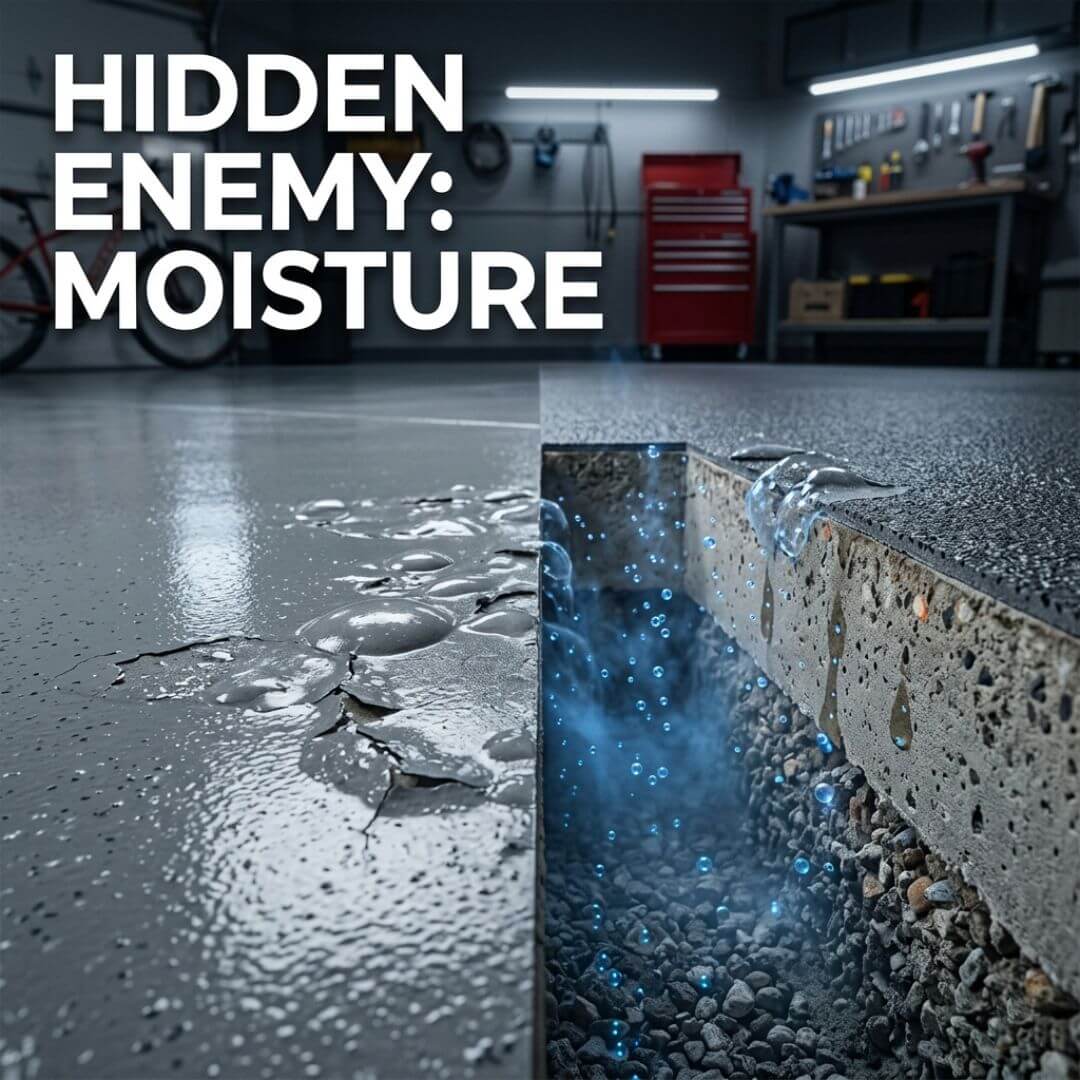
Introduction: The Problem You Can’t See
Your garage floor might look dry, solid, and perfectly fine.
But beneath the surface, moisture could already be causing damage.
Concrete acts like a dense sponge. It constantly interacts with:
- The soil beneath it
- The air above it
Even when it appears dry, moisture is often moving through it.
This invisible movement is what makes moisture the most dangerous threat to garage floors.
Why Concrete Is Vulnerable to Moisture
Concrete is not waterproof. It contains tiny pores and capillaries that allow water and vapor to move through it.
Moisture vapor can travel upward from the ground through these pores a process known as moisture vapor transmission
Even after curing, concrete continues to release moisture and allow vapor movement.
This means:
- There is always moisture present
- It is always moving
- It can cause damage at any time
How Moisture Destroys Garage Floor Coatings
One of the biggest issues moisture causes is coating failure.
Hydrostatic Pressure
When moisture becomes trapped beneath a coating:
- Pressure builds
- The coating is pushed upward
- Blisters and bubbles form
Over time, this leads to:
- Peeling
- Delamination
- Complete coating failure
Moisture trapped under coatings can generate enough pressure to lift and damage the surface
Structural Damage: Cracking and Spalling
Moisture doesn’t just affect coatings it weakens the concrete itself.
Freeze-Thaw Damage
When water enters concrete and freezes:
- It expands by about 9%
- Internal pressure increases
- Cracks begin to form
Repeated cycles lead to:
- Spalling (surface flaking)
- Structural weakening
- Progressive deterioration
Sweating Slab Syndrome and Safety Risks
In humid conditions:
- Warm air meets a cool concrete surface
- Moisture condenses on top
This creates:
- Wet, slippery floors
- Increased risk of slips and falls
It also indicates:
- High humidity levels
- Ongoing moisture issues
Efflorescence: The White Warning Sign
If you notice a white, powdery residue on your floor:
That’s efflorescence.
It happens when:
- Moisture carries minerals to the surface
- Water evaporates
- Salts are left behind
This is a clear sign of:
- Active moisture movement
- Ongoing internal damage
Mold, Corrosion, and Long-Term Damage
Persistent moisture creates ideal conditions for:
Mold and Mildew
- Thrive in damp environments
- Cause odors and health issues
Corrosion
- Moisture reaches embedded metal
- Steel begins to rust
- Expansion causes internal cracking
Moisture-related dampness is known to promote mold growth and structural deterioration in buildings
Where Moisture Comes From
1. Lack of a Vapor Barrier
Older slabs often lack protection underneath, allowing moisture to rise from the ground.
2. Poor Drainage
Water from rain or snow collects around the foundation and seeps into the slab.
3. Humidity and Temperature Changes
Warm air contacting cool concrete leads to condensation.
4. Ground Moisture
The soil beneath concrete is almost always damp, providing a constant source of moisture
How to Prevent Moisture Damage
1. Perform Moisture Testing
Identify vapor issues before applying coatings.
2. Use Moisture-Mitigation Systems
Special primers and coatings help block moisture transmission.
3. Improve Drainage
Ensure water flows away from the garage and foundation.
4. Increase Ventilation
Reduce humidity with airflow or dehumidifiers.
5. Apply Protective Coatings
High-quality systems create a barrier against moisture and vapor.
Conclusion: Stop Moisture Before It Starts
Moisture is dangerous because it works silently.
You don’t see it.
You don’t notice it.
But over time, it:
- Breaks coatings
- Weakens concrete
- Causes structural damage
By the time visible signs appear, the damage is already underway.
The key is prevention controlling moisture before it has a chance to destroy your garage floor.
FAQ Section
1. Why is moisture bad for garage floors?
Moisture weakens concrete, causes cracks, and leads to coating failure through pressure buildup.
2. Can concrete look dry but still have moisture?
Yes. Moisture vapor can move through concrete even when the surface appears dry.
3. What causes coating bubbles on garage floors?
Trapped moisture creates pressure under the coating, causing bubbling and peeling.
4. What is efflorescence on concrete?
It is a white powder left behind when moisture evaporates and deposits minerals.
5. How can I tell if moisture is coming through my floor?
Signs include damp spots, efflorescence, mold, or coating failure.
6. What is the best way to stop moisture damage?
Use proper drainage, moisture testing, and professional coating systems designed to block vapor.