
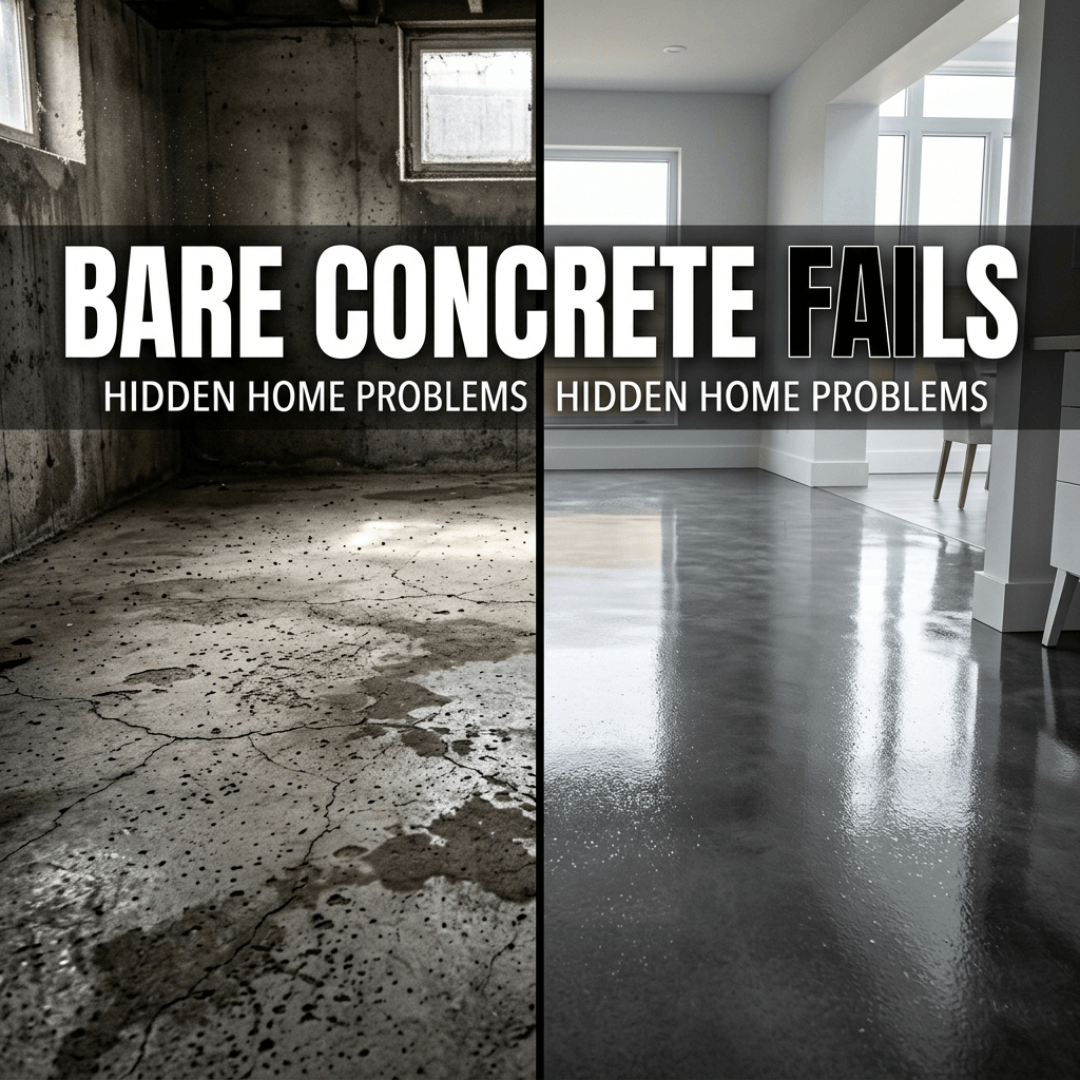
Introduction: The Hidden Truth About Concrete
Concrete is often seen as one of the most durable materials in a home. It’s used for garage floors, driveways, patios, and basements so it must be strong, right?
Here’s the reality most homeowners don’t realize:
Bare concrete is not indestructible it’s actually one of the most misunderstood materials in your home.
It may have high compressive strength, but it is:
- Porous
- Brittle
- Vulnerable to water and environmental stress
Left untreated, bare concrete doesn’t just wear out it actively deteriorates over time, often within the first 5–10 years.
Why Concrete Isn’t as Strong as You Think
Concrete is excellent at handling pressure (like the weight of your car), but it has a critical weakness:
It performs poorly under tension
That means:
- Small movements in the ground = cracks
- Temperature changes = expansion and contraction
- Moisture intrusion = internal damage
Even more important:
Concrete is filled with microscopic pores
These tiny voids allow water to enter, making it behave more like a sponge than a solid surface.
Water Ingress: The #1 Cause of Concrete Failure
Concrete Is Porous Like a Sponge
Despite its solid appearance, concrete absorbs water through tiny capillaries. Once moisture enters, the real damage begins.
What Happens Next?
- Water carries salts, chemicals, and contaminants
- These materials break down the concrete internally
- The slab weakens from the inside out
Freeze-Thaw Damage (The Silent Killer)
In colder climates, this problem gets much worse:
- Water enters the concrete
- It freezes and expands by about 9%
- This creates internal pressure
- Microcracks form and grow
Over time, this cycle:
- Expands cracks
- Causes flaking (spalling)
- Weakens the entire slab
Repeated freeze-thaw cycles are one of the primary causes of concrete failure
Installation Mistakes That Start the Damage Early
Many concrete failures don’t start years later they start on day one.
1. Poor Curing
Concrete needs controlled moisture to gain strength.
If it dries too quickly:
- It becomes weak
- The surface turns dusty
- Cracking becomes inevitable
2. Too Much Water in the Mix
Adding extra water makes concrete easier to pour but:
- Increases porosity
- Reduces strength
- Creates long-term durability issues
3. Poor Subgrade Preparation
If the soil underneath isn’t compacted properly:
- The slab shifts
- Voids form underneath
- Cracks and sinking occur
Environmental Stress: The Silent Destroyer
Concrete is constantly under stress even if you don’t notice it.
Thermal Expansion & Contraction
- Heat → concrete expands
- Cold → concrete contracts
Without proper joints, this movement leads to:
- Pressure buildup
- Surface cracking
Chemical Exposure
Common household substances damage concrete:
- De-icing salts
- Fertilizers
- Cleaning chemicals
These react with the surface, causing:
- Pitting
- Surface erosion
- Structural weakening
Rebar Corrosion
When water reaches internal steel reinforcement:
- Steel rusts
- Rust expands
- Concrete cracks and flakes (spalling)
This creates a dangerous cycle of deterioration.
Aesthetic & Functional Failures Homeowners Ignore
Concrete failure isn’t just structural it affects your daily life.
Dusting
- Fine powder forms on the surface
- Hard to clean
- Indicates surface breakdown
Staining
- Oil, chemicals, and dirt soak into the slab
- Permanent discoloration
Safety Hazards
- Slippery when wet
- Cracks create trip hazards
- Uneven surfaces increase risk of injury
Appearance Issues
- Dull, industrial look
- Makes spaces feel darker and uninviting
Common Signs Your Concrete Is Already Failing
Watch for these early warning signs:
- Cracks (hairline to structural)
- Spalling (flaking or chipping surface)
- Dusting (powder residue)
- Staining (deep, permanent marks)
- Uneven settling or sinking
These are not cosmetic issues they’re signs of active deterioration.
Why Concrete Failure Gets Worse Over Time
Concrete doesn’t heal itself.
Once damage begins:
- Water enters cracks
- Cracks expand
- More water enters
- Damage accelerates
This creates a destructive feedback loop:
More damage → more exposure → faster failure
Freeze-thaw cycles make this even worse by repeatedly expanding and weakening the material
The Biggest Mistake Homeowners Make (DIY Trap)
Many homeowners try to fix failing concrete with:
- DIY epoxy kits
- Surface patches
- Quick sealers
Here’s the problem:
These solutions only cover symptoms not causes
They do NOT:
- Stop moisture intrusion
- Fix structural movement
- Address underlying damage
Result:
- Temporary improvement
- Faster long-term failure
How to Prevent Concrete Failure for Good
The solution isn’t patching it’s protection.
Step 1: Seal the Surface
Applying a professional coating:
- Blocks moisture
- Prevents chemical damage
- Reduces porosity
Step 2: Use Advanced Coating Systems
Modern systems like polyurea or polyaspartic coatings:
- Bond deeply to concrete
- Resist UV damage
- Handle temperature changes
- Last significantly longer than basic epoxy
Step 3: Fix the Root Cause
A proper system includes:
- Surface preparation
- Crack repair
- Moisture mitigation
This is what prevents failure not just covering it up
Conclusion: From Failing Concrete to Long-Term Protection
Bare concrete fails because it was never designed to be left exposed.
It is:
- Porous
- Vulnerable to water
- Sensitive to environmental stress
Over time, these weaknesses lead to:
- Cracking
- Spalling
- Structural damage
- Costly repairs
But here’s the good news:
Concrete failure is preventable
With the right protection system, you can:
- Extend the life of your concrete
- Improve appearance
- Eliminate maintenance headaches
- Avoid expensive replacements
Frequently Asked Questions
1. Why does bare concrete crack so easily?
Concrete is strong under pressure but weak under tension. Small movements, temperature changes, and moisture cause it to crack over time.
2. Is concrete waterproof?
No. Concrete is porous and absorbs water, which leads to internal damage and deterioration.
3. What is spalling in concrete?
Spalling is when the surface of concrete flakes or chips away due to moisture, freeze-thaw cycles, or internal pressure.
4. How long does bare concrete last?
Unprotected concrete can begin showing signs of failure within 5–10 years, depending on environmental conditions.
5. Can I fix concrete with a DIY kit?
DIY solutions are temporary. They don’t address underlying issues like moisture intrusion or structural movement.
6. What is the best way to protect concrete?
Applying a professional-grade coating system (like polyurea or polyaspartic) is the most effective way to protect concrete long-term.
7. Does sealing concrete really help?
Yes. Sealing prevents water penetration, reduces damage, and significantly extends the lifespan of concrete.