
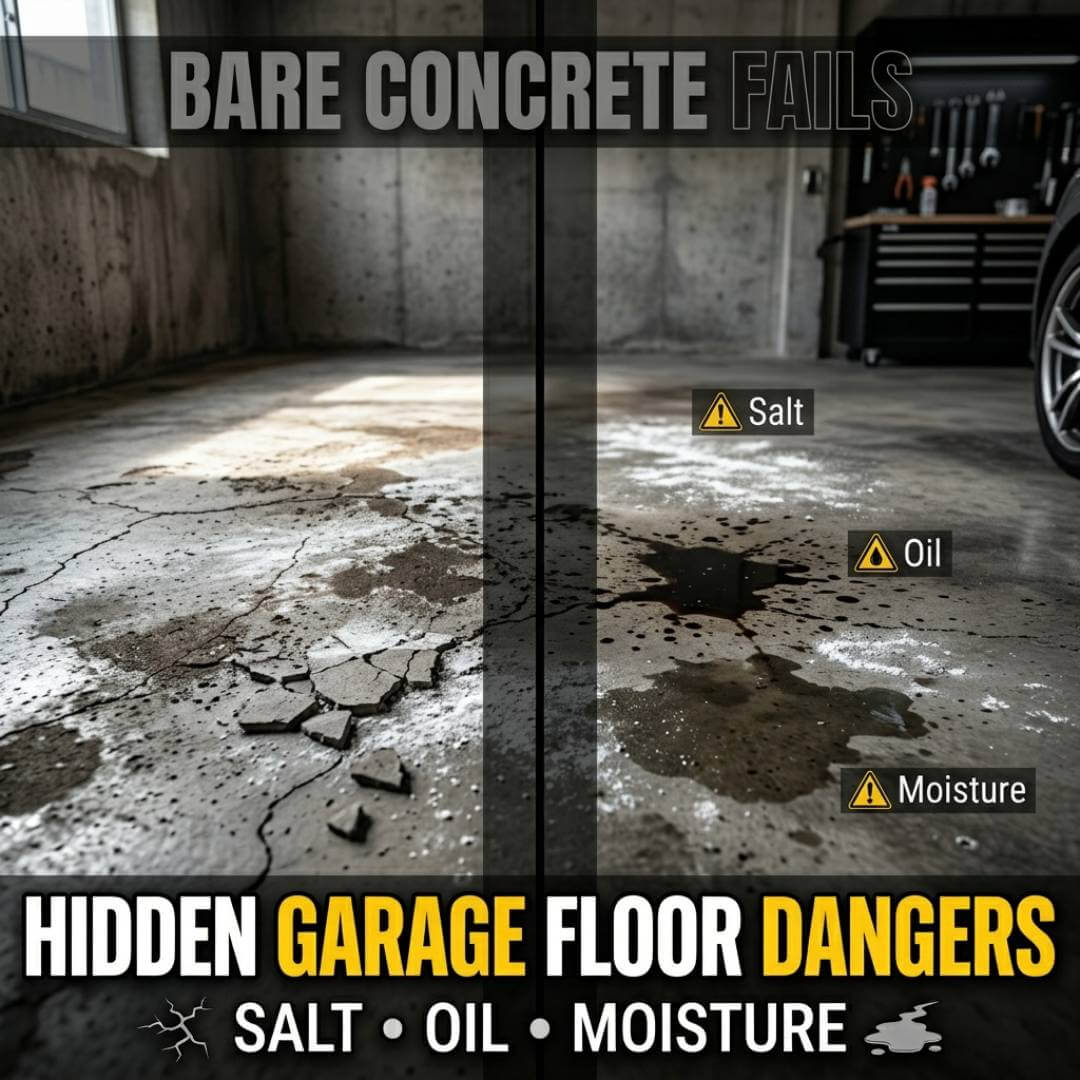
Introduction: The “Perfect Storm” Under Your Feet
Your garage floor might look solid, strong, and built to last but beneath the surface, a silent breakdown could already be happening.
Every time you drive into your garage, you bring in:
- Road salt from winter streets
- Oil and chemicals from your vehicle
- Moisture from rain, snow, and humidity
Individually, these elements are harmful.
But together?
They create a perfect storm for concrete failure
This combination doesn’t just stain your floor it actively destroys it from the inside out.
Why Garage Floors Are More Vulnerable Than You Think
Concrete may look dense and durable, but it has a critical weakness:
It’s porous
This means:
- Liquids penetrate deep into the surface
- Chemicals travel through microscopic pores
- Damage happens below what you can see
In fact, water is considered the most destructive agent of concrete, especially when it carries salts and chemicals
The Hidden Dangers of Salt (The Silent Destroyer)
Salt is one of the most aggressive threats to your garage floor especially in winter.
How Salt Damages Concrete
1. Surface Scaling and Spalling
Salt-laden water seeps into concrete and freezes.
- Water expands by ~9% when frozen
- This creates internal pressure
- The surface begins to peel and flake
Result:
Rough, pitted, and crumbling concrete
2. Internal Cracking
Salt lowers the freezing point of water, causing repeated freeze-thaw cycles.
- More cycles = more stress
- Microcracks grow into structural cracks
Research shows that salt + freeze-thaw cycles significantly accelerate concrete deterioration
3. Corrosion of Reinforcement (Rebar Damage)
Chloride ions from salt penetrate deep into concrete.
- They break down protective layers around steel
- Steel rusts and expands
- Expansion cracks the concrete from inside
4. Surface Wear on Coatings
Even coated floors aren’t immune:
- Salt crystals act like abrasives
- They dull finishes and wear down coatings over time
The Damage Caused by Oil and Chemical Spills
Oil isn’t just messy it’s destructive.
1. Deep Penetration Into Concrete
When oil hits warm concrete:
- It becomes thinner
- It seeps deep into pores
- It bonds with the material
Making it nearly impossible to remove completely
2. Long-Term Surface Degradation
Oil doesn’t just sit there:
- It weakens the concrete matrix
- It attracts dirt and contaminants
- It creates permanent dark stains
3. Coating Failure Risk
Planning to coat your floor later?
Oil is a major problem:
- It prevents coatings from bonding
- Causes peeling and bubbling
- Leads to early failure
4. Safety Hazards
Oil creates:
- Slippery surfaces
- Increased fall risk
- Dangerous working conditions
Moisture: The Carrier That Makes Everything Worse
Moisture is the multiplier that intensifies all other damage.
1. Sweating Concrete (Condensation)
During humid conditions:
- Concrete pulls moisture from the air
- Floors appear constantly wet
This leads to:
- Mold and mildew growth
- Slippery surfaces
- Coating adhesion issues
2. Hydrostatic Pressure (Upward Moisture)
If your garage lacks a proper vapor barrier:
- Moisture rises from below
- Pressure builds under the surface
- Coatings bubble or peel
3. Efflorescence (The White Warning Sign)
When moisture evaporates:
- It leaves behind mineral deposits
This indicates:
- Active moisture movement
- Internal deterioration
How These Three Combine to Accelerate Concrete Failure
Here’s where things get dangerous.
The Chain Reaction:
- Moisture enters concrete
- Salt and chemicals travel with it
- Oil weakens the surface
- Freeze-thaw cycles expand internal damage
The result:
- Faster cracking
- Severe spalling
- Structural weakening
Studies confirm that combined salt exposure and freeze-thaw cycles dramatically increase damage compared to water alone
Warning Signs Your Garage Floor Is Already Under Attack
Look for these early indicators:
- Flaking or chipping surface (spalling)
- Cracks spreading across the floor
- White powder residue (efflorescence)
- Dark oil stains that won’t disappear
- Damp or “sweaty” concrete
- Uneven or pitted texture
These are not cosmetic they’re signs of active deterioration.
Why This Damage Gets Worse Over Time
Concrete damage is progressive.
Once it starts:
- Cracks allow more moisture in
- Moisture brings more contaminants
- Freeze-thaw cycles expand damage
It becomes a self-accelerating cycle
The Biggest Mistake Homeowners Make
Most homeowners try to fix the problem with:
- DIY epoxy kits
- Surface cleaning
- Temporary sealers
But here’s the truth:
These solutions don’t stop the root cause
They don’t:
- Block deep moisture
- Remove embedded oil
- Prevent salt penetration
How to Protect Your Garage Floor from Long-Term Damage
1. Seal the Concrete
Concrete sealers:
- Block pores
- Prevent water and salt entry
- Reduce staining
They either:
- Penetrate and protect internally
- Or create a protective surface barrier
2. Clean Regularly
Especially after winter:
- Remove salt buildup
- Wash away contaminants
- Prevent long-term accumulation
3. Use Safer De-Icing Alternatives
Reduce damage by using:
- Sand
- Kitty litter
- Less corrosive de-icers
4. Install a Professional Coating System
High-performance coatings:
- Create a waterproof barrier
- Resist chemicals and oil
- Prevent long-term deterioration
5. Control Moisture
- Improve ventilation
- Use dehumidifiers
- Reduce condensation buildup
Conclusion: Stop the Damage Before It Spreads
Salt, oil, and moisture may seem harmless on their own but together, they create one of the most destructive environments for your garage floor.
What starts as:
- A small stain
- A minor crack
- A little moisture
Can quickly turn into:
- Structural damage
- Costly repairs
- Complete floor failure
The key is prevention not repair
Protect your concrete early, and you avoid:
- Expensive replacements
- Safety hazards
- Constant maintenance
FAQ Section
1. Why is salt so damaging to concrete?
Salt accelerates freeze-thaw cycles and introduces chlorides that weaken concrete and corrode internal steel.
2. Can oil permanently damage a garage floor?
Yes. Oil penetrates deeply into concrete pores and can weaken the surface while preventing future coatings from bonding.
3. What causes concrete to flake or chip?
This is called spalling, usually caused by moisture, salt, and freeze-thaw expansion inside the concrete.
4. Is moisture always harmful to concrete?
Yes. Moisture is the primary cause of most concrete damage, especially when combined with chemicals and temperature changes.
5. How can I protect my garage floor long-term?
Use professional sealing or coating systems, maintain regular cleaning, and reduce exposure to salt and moisture.
6. Are DIY coatings effective?
They are temporary solutions and often fail because they don’t address underlying moisture or contamination issues.