
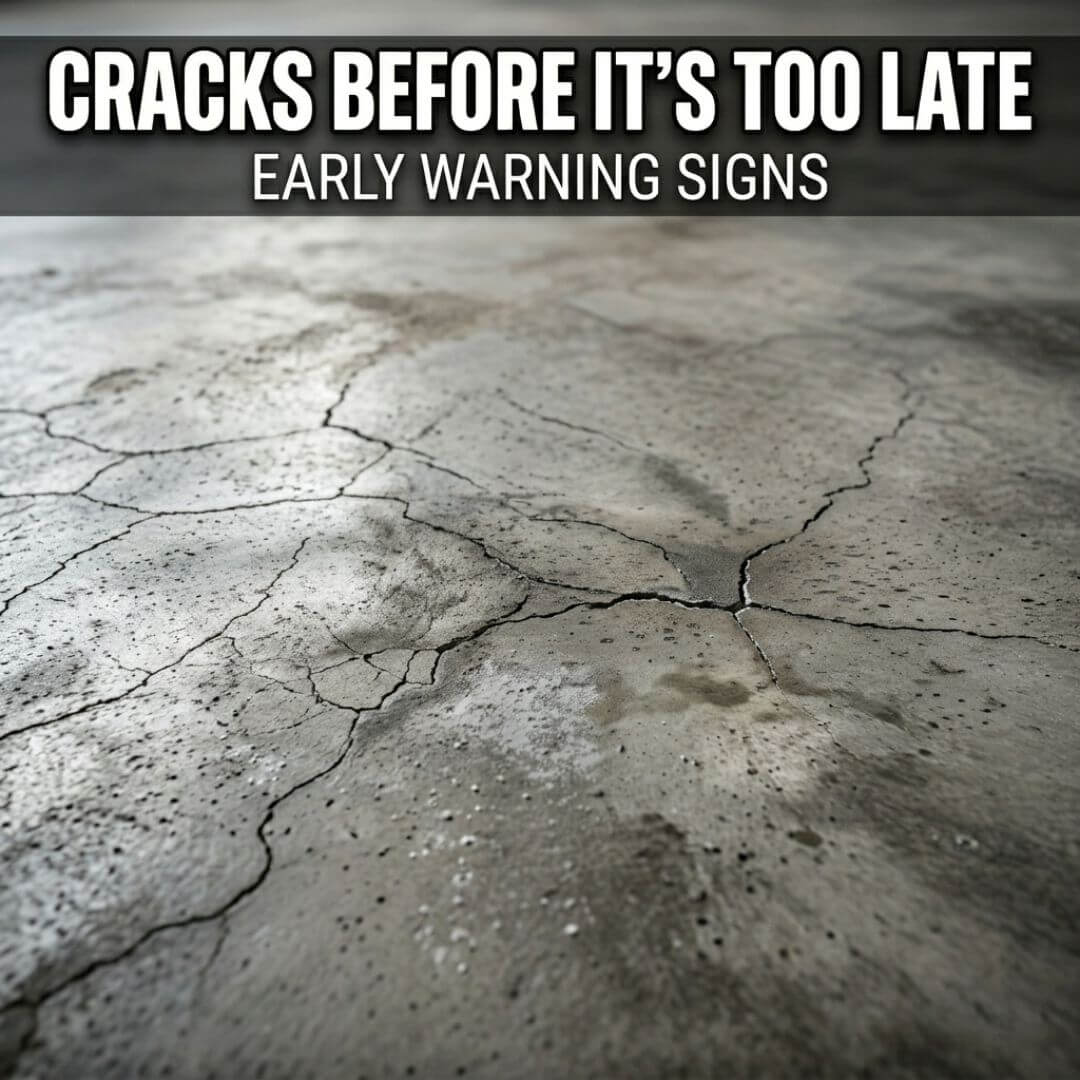
Introduction: Why Early Detection Matters
Concrete doesn’t suddenly fail overnight.
It gives warning signs subtle at first, then progressively worse.
The problem?
Most homeowners ignore those early signs until the damage becomes expensive or dangerous.
Catching concrete failure early can mean:
- Minor repairs instead of full replacement
- Safer surfaces
- Longer lifespan
What Causes Concrete to Crack in the First Place
Concrete cracks for several reasons:
- Shrinkage during curing
- Soil movement beneath the slab
- Temperature expansion and contraction
- Water infiltration
Concrete is strong under pressure but weak under tension, which makes it prone to cracking when stress builds up internally
Wide or Deep Cracks: The First Major Red Flag
Not all cracks are equal.
What to Look For:
- Cracks wider than 1/4 inch
- Cracks that continue to grow
- Long cracks running across the slab
What It Means:
These cracks are not cosmetic they often indicate:
- Structural movement
- Subgrade failure
- Load stress issues
Large cracks are commonly linked to settlement or external stress forces
Uneven Surfaces (Lipping): A Serious Structural Warning
Run your hand across a crack.
Does one side feel higher than the other?
This Indicates:
- Soil shifting
- Slab sinking or heaving
- Loss of support underneath
Why It Matters:
- Creates trip hazards
- Signals deeper structural instability
Spalling and Pitting: When the Surface Starts Failing
Spalling is when the concrete begins to:
- Flake
- Chip
- Break apart
Causes:
- Moisture intrusion
- Freeze-thaw cycles
- Poor installation
Concrete spalling is a clear sign of underlying damage, not just surface wear
Rust Stains: Hidden Damage Beneath the Surface
If you see orange or brown stains:
That’s not just dirt it’s corrosion.
What’s Happening:
- Steel reinforcement inside the concrete is rusting
- Rust expands and creates internal pressure
- The concrete begins to crack and break
Rust staining is often an early sign of reinforcement corrosion and internal damage
Water Pooling: A Sign of Drainage and Structural Issues
Notice water sitting in certain areas?
That’s a warning sign.
What It Means:
- The slab has settled unevenly
- Drainage is poor
- Structural support is compromised
Water is one of the most destructive elements in concrete degradation
Crazing: Small Cracks That Lead to Bigger Problems
Crazing looks like:
- Fine, spiderweb-like cracks on the surface
Causes:
- Rapid drying during curing
- Poor finishing techniques
Why It Matters:
- Not immediately structural
- But allows moisture to enter
- Leads to scaling and deeper damage over time
When to Take Immediate Action
Act Immediately If:
- Cracks are wider than 1/4 inch
- Cracks are spreading quickly
- Uneven surfaces create tripping hazards
- Rust stains are visible
- Water pooling persists
Why:
Ignoring these signs leads to:
- Structural failure
- Expensive repairs
- Safety risks
How to Prevent Concrete Cracking and Failure
1. Seal the Concrete
Sealing blocks:
- Water
- Chemicals
- Contaminants
2. Improve Drainage
- Ensure water flows away from the slab
- Prevent pooling and saturation
3. Address Issues Early
- Repair cracks before they expand
- Monitor changes over time
4. Use Professional Coating Systems
High-quality coatings:
- Protect against moisture
- Reinforce the surface
- Extend lifespan
Conclusion: Don’t Wait Until It’s Too Late
Concrete failure doesn’t happen instantly it builds over time.
What starts as:
- A small crack
- A minor stain
- A slight uneven surface
Can quickly turn into:
- Structural damage
- Costly repairs
- Safety hazards
The key is early detection and action
FAQ Section
1. What size crack in concrete is dangerous?
Cracks wider than 1/4 inch are typically considered serious and may indicate structural issues.
2. Is spalling just cosmetic damage?
No. Spalling often signals deeper structural problems caused by moisture or corrosion.
3. What causes rust stains on concrete?
Rust stains come from corroding steel reinforcement inside the concrete, which expands and cracks the surface.
4. Why is water pooling on my concrete?
Pooling usually indicates uneven settling or poor drainage, both of which can lead to structural issues.
5. Can small cracks become big problems?
Yes. Even hairline cracks can allow water in, leading to expansion, deterioration, and larger cracks.
6. When should I call a professional?
If cracks grow, surfaces become uneven, or you notice rust or spalling, it’s time for a professional assessment.