
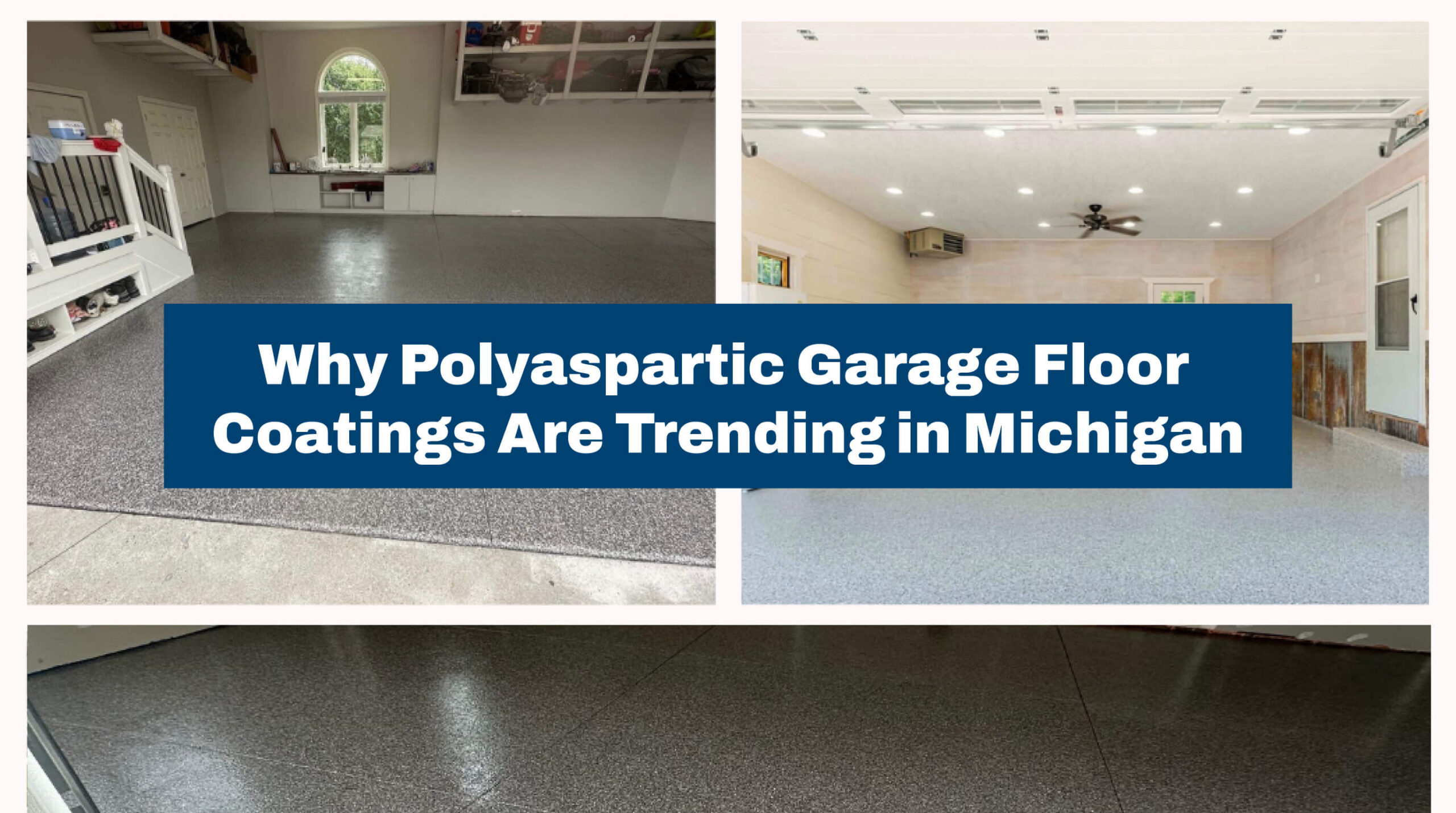
Michigan garages face some of the harshest conditions in the United States. Heavy snow, road salt, freezing temperatures, and constant moisture exposure quickly damage untreated concrete and traditional epoxy coatings.
As a result, homeowners are increasingly switching to modern coating systems—especially polyaspartic garage floor coatings—because they offer superior durability, faster installation, and long-term resistance to weather and chemical damage.
This shift has made polyaspartic systems one of the fastest-growing trends in garage floor protection across Michigan in 2026.
What Is a Polyaspartic Garage Floor Coating?
A polyaspartic coating is a high-performance floor system derived from polyurea chemistry. It is commonly used as a topcoat in professional garage floor systems due to its UV stability, chemical resistance, and fast curing time.
Unlike traditional epoxy, polyaspartic coatings are designed to withstand extreme environmental stress while maintaining a glossy, long-lasting finish.
Why Polyaspartic Coatings Are Trending in Michigan
1. Resistance to Road Salt and Winter Chemicals
Michigan roads are heavily treated with salt and de-icing chemicals during winter. When vehicles enter the garage, these corrosive materials transfer onto the floor.
Polyaspartic coatings resist:
- Road salt corrosion
- Oil and gasoline stains
- De-icing chemicals
- Moisture penetration
This prevents long-term concrete pitting and surface deterioration.
2. Freeze-Thaw Durability
One of the biggest challenges in Michigan is the constant freeze-thaw cycle. Concrete expands when warm and contracts when frozen, which leads to cracking and surface failure.
Polyaspartic systems remain flexible and bonded to the concrete, helping prevent:
- Cracking
- Chipping
- Delamination
- Surface flaking
This makes them ideal for Midwest climates.
3. UV Stability (No Yellowing or Fading)
Standard epoxy coatings often yellow when exposed to sunlight through open garage doors or windows.
Polyaspartic coatings are UV-stable, meaning they:
- Do not yellow over time
- Maintain color and gloss
- Preserve decorative flake systems
- Stay visually clean for years
This is a major reason for their rising popularity.
4. Fast 1-Day Installation
Traditional epoxy systems can take 2–5 days to fully cure.
Polyaspartic systems offer:
- Walk-on time in a few hours
- Vehicle use within 24 hours
- Minimal downtime
This is especially appealing for Michigan homeowners who want winter-ready garages quickly.
5. Hot Tire Resistance
Hot tires from vehicles can soften low-quality epoxy, causing peeling or lifting (known as “hot tire pickup”).
Polyaspartic coatings are designed to withstand high tire temperatures without:
- Peeling
- Bubbling
- Adhesion failure
This improves long-term durability under daily vehicle use.
Polyaspartic vs Epoxy vs Polyurea (Simple Comparison)
| Feature | Epoxy | Polyurea | Polyaspartic |
|---|---|---|---|
| UV Resistance | Low | Moderate | Excellent |
| Freeze-Thaw Resistance | Low | High | High |
| Cure Time | 2–5 Days | Very Fast | Fast (1 Day) |
| Salt Resistance | Moderate | High | Excellent |
| Durability | Medium | High | Very High |
| Lifespan | 3–10 Years | 10–20 Years | 15–25+ Years |
Why Installers Use a Hybrid System
In Michigan, most professional installers use a hybrid system instead of a single coating.
Typical system:
- Base Coat: Polyurea (flexibility & adhesion)
- Decorative Layer: Vinyl flakes (texture & style)
- Top Coat: Polyaspartic (UV protection & durability)
This combination delivers maximum performance in harsh climates.
Is Polyaspartic Better Than Epoxy?
For Michigan conditions, yes—polyaspartic systems outperform epoxy in nearly every category.
Epoxy is:
- More affordable upfront
- Less resistant to UV and salt
- More likely to peel over time
Polyaspartic is:
- More durable
- Faster curing
- Better suited for winter climates
- Longer lasting overall
How Long Do Polyaspartic Floors Last?
A professionally installed polyaspartic garage floor can last 15–25+ years, depending on:
- Surface preparation quality
- Traffic levels
- Maintenance practices
- Installation system used
Conclusion
Polyaspartic garage floor coatings are trending in Michigan because they solve the biggest challenges homeowners face: salt damage, freeze-thaw cracking, UV fading, and long installation times.
Their combination of durability, fast curing, and all-weather resistance makes them one of the most effective garage floor solutions for harsh northern climates.
For homeowners looking for a long-term upgrade, polyaspartic and hybrid polyurea systems are now considered the modern standard for garage floor protection in Michigan.