
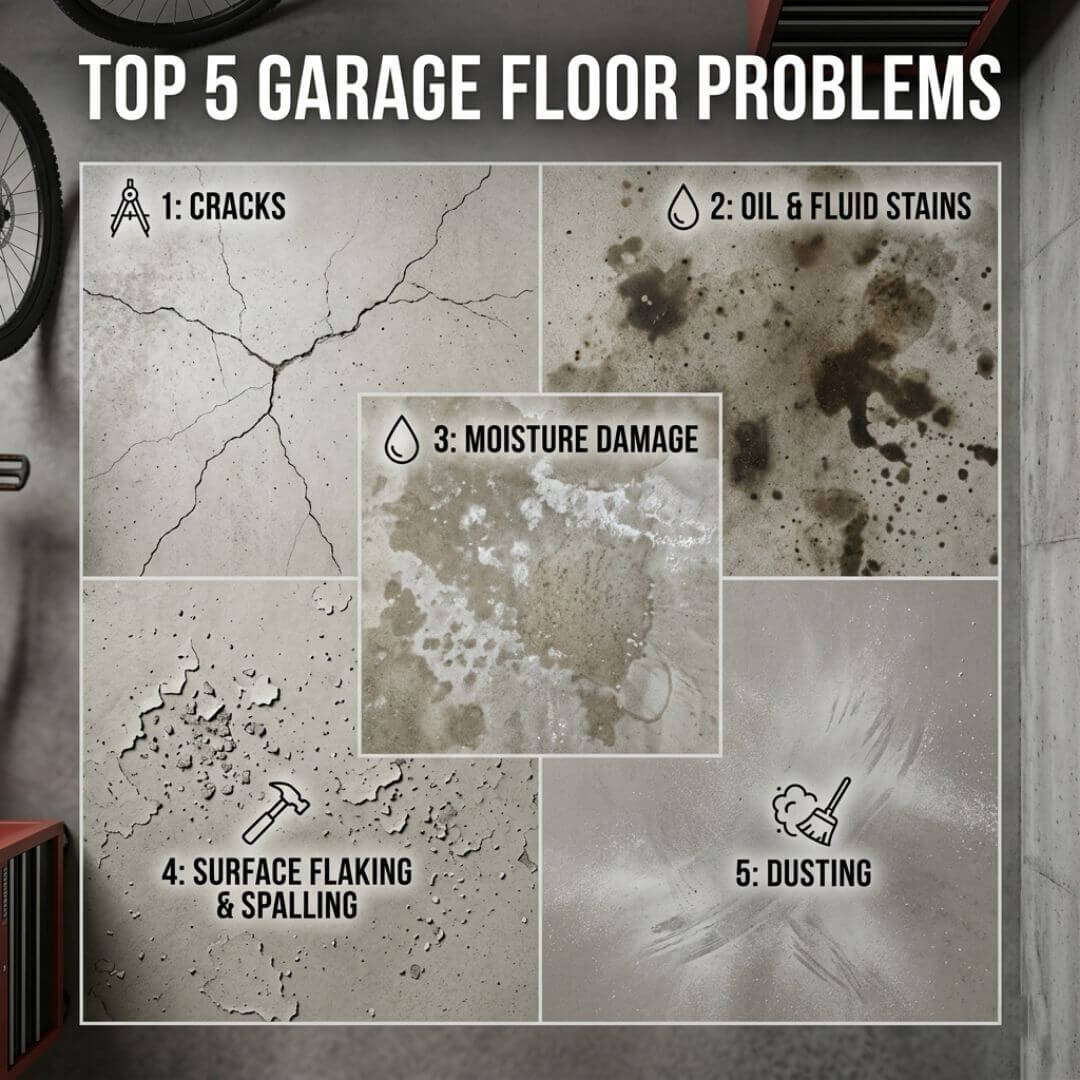
Introduction: Why Garage Floors Fail Over Time
Garage floors take more abuse than almost any surface in your home.
They deal with:
- Heavy vehicle loads
- Temperature changes
- Road salt and chemicals
- Moisture exposure
Concrete is durable but it is not indestructible.
Over time, these stressors lead to common problems that affect both appearance and structural integrity.
Problem #1: Cracking
Cracking is the most common issue in garage floors.
Causes:
- Shrinkage during curing
- Temperature expansion and contraction
- Soil movement beneath the slab
- Heavy loads from vehicles
Concrete naturally shrinks as it cures, which creates internal stress that leads to cracking
Why It Matters:
- Allows water to enter
- Leads to further structural damage
- Expands over time if untreated
Fix:
- Small cracks: epoxy or sealant
- Large cracks: injection repair or resurfacing
Problem #2: Spalling (Scaling and Flaking)
Spalling occurs when the surface begins to chip, peel, or flake.
Causes:
- Moisture intrusion
- Freeze-thaw cycles
- Salt and chemical exposure
- Poor concrete mix or installation
Water entering the concrete and freezing creates internal pressure that breaks the surface apart
Why It Matters:
- Weakens the surface
- Creates rough, unsafe texture
- Leads to deeper structural damage
Fix:
- Remove loose material
- Apply resurfacing or protective coating
Problem #3: Stains and Discoloration
Concrete is highly porous, making it vulnerable to staining.
Causes:
- Oil and grease leaks
- Gasoline spills
- Road salt and chemicals
Why It Matters:
- Permanent discoloration
- Hard to clean
- Makes the garage look neglected
Fix:
- Degreasers for surface cleaning
- Coatings to prevent future absorption
Problem #4: Uneven Settling (Sunken Concrete)
Over time, garage slabs can shift or sink.
Causes:
- Poor soil compaction
- Erosion beneath the slab
- Water washing away base material
Settlement creates tension in the slab, leading to cracks and instability
Why It Matters:
- Creates trip hazards
- Causes drainage issues
- Leads to structural stress
Fix:
- Polyurethane foam injection (slab jacking)
- Stabilization without full replacement
Problem #5: Moisture and Efflorescence
Moisture is one of the most damaging factors affecting concrete.
Causes:
- High humidity
- Poor drainage
- Lack of vapor barrier
Effects:
- Cracking and spalling
- Mold and mildew growth
- White powder residue (efflorescence)
Moisture infiltration can weaken concrete and lead to long-term deterioration
Fix:
- Apply sealers or coatings
- Improve drainage
- Use moisture barriers
Why Unfinished Concrete Floors Get Worse
Leaving concrete unprotected leads to:
- Dusting (surface breakdown into powder)
- Increased porosity
- Faster damage from chemicals and water
Without protection, all five problems:
- Appear sooner
- Spread faster
- Cost more to fix
How to Prevent These Problems Long-Term
1. Seal the Surface
Prevents moisture and chemical penetration
2. Maintain Proper Drainage
Reduces water buildup and erosion
3. Repair Early Damage
Stops small issues from becoming major repairs
4. Use Protective Coatings
Creates a barrier against:
- Moisture
- Chemicals
- Wear and tear
Conclusion: Stop Small Problems Before They Grow
Garage floor problems don’t happen overnight.
They start small:
- Hairline cracks
- Minor stains
- Slight unevenness
Then they grow into:
- Structural damage
- Safety hazards
- Expensive repairs
The key is early detection and prevention.
Addressing these issues early protects both your floor and your investment.
FAQ Section
1. What is the most common garage floor problem?
Cracking is the most common issue due to shrinkage, movement, and temperature changes.
2. What causes concrete to flake or chip?
This is called spalling, usually caused by moisture, freeze-thaw cycles, or chemical exposure.
3. Are stains permanent on concrete?
Yes, because concrete is porous. Coatings are often needed to prevent long-term staining.
4. Why does my garage floor feel uneven?
Uneven settling is caused by soil movement or erosion beneath the slab.
5. Is moisture really a big problem for concrete?
Yes. Moisture can cause cracking, spalling, mold growth, and structural weakening.
6. How can I protect my garage floor long-term?
Sealing, proper drainage, early repairs, and professional coatings are the most effective solutions.