
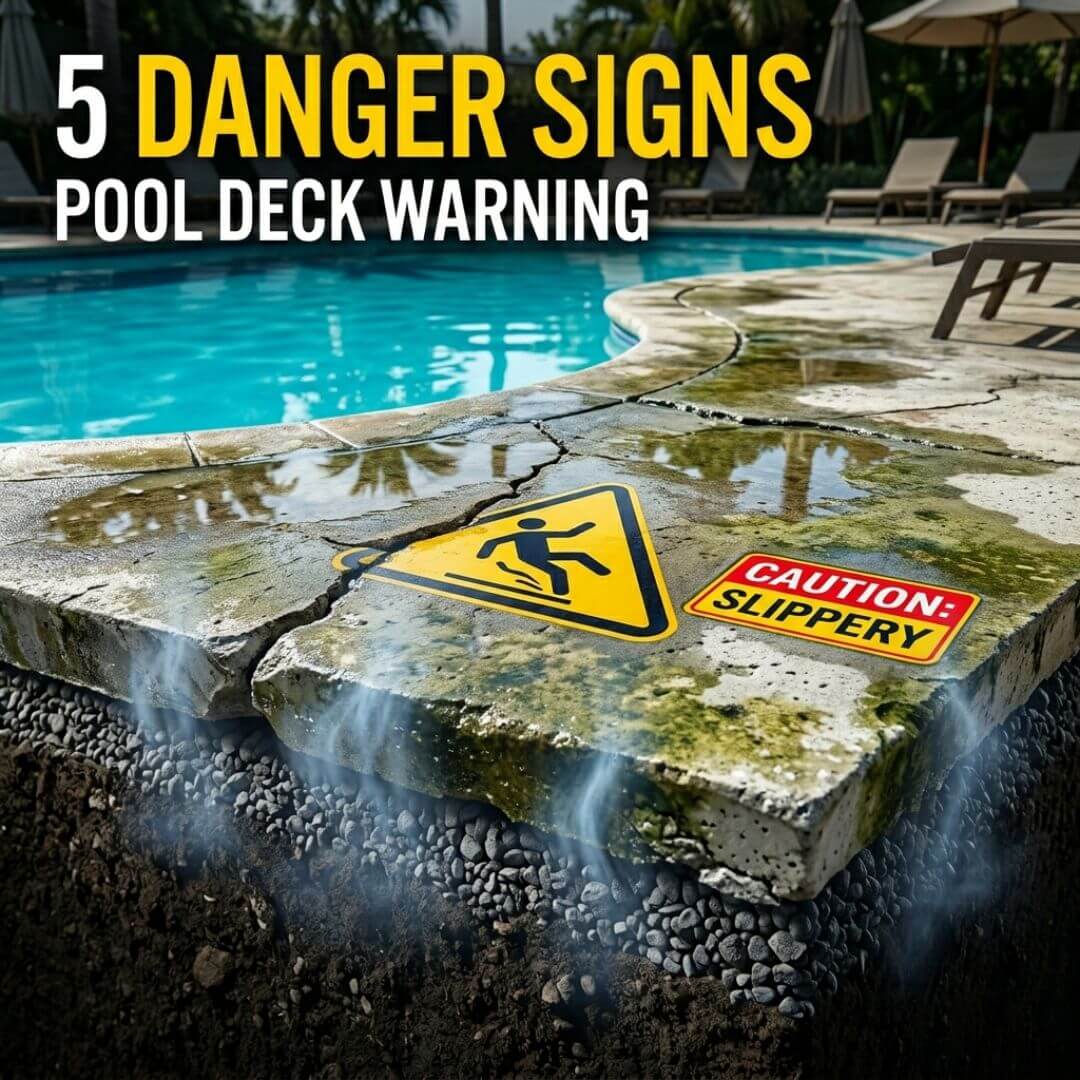
Introduction: Your Pool Deck Might Be Riskier Than You Think
Your pool deck should be a place for relaxation not a source of danger.
But constant exposure to:
- Water
- Pool chemicals
- UV rays
- Foot traffic
Slowly breaks down the surface over time.
What starts as small cosmetic issues can quickly turn into serious safety hazards. Wet pool decks are already prone to slips, and any added damage increases the risk of injury
The key is catching the warning signs early.
Sign #1: Cracks and Structural Fractures
Cracks are one of the most obvious and most ignored warning signs.
Why It Happens:
- Soil movement beneath the slab
- Temperature changes
- Water infiltration
The Danger:
- Trip hazards
- Sharp edges that can cut bare feet
- Water entering cracks and worsening damage
Cracked pool decks not only look bad but also increase the risk of injuries and structural failure
What to Do:
- Small cracks: use a concrete filler or sealant
- Large or growing cracks: call a professional for repair or stabilization
Sign #2: Uneven Surfaces and Sinking Spots
If your pool deck feels uneven or looks like it’s sinking, there’s a deeper issue.
Why It Happens:
- Soil erosion beneath the slab
- Poor compaction during installation
- Water washing away support
The Danger:
- Unexpected elevation changes
- High risk of slips and falls
- Increased stress on surrounding concrete
What to Do:
- Use polyurethane foam injection (slab leveling)
- Replace severely damaged sections if needed
Sign #3: Loose, Chipped, or Broken Tiles/Pavers
Over time, tiles and pavers can loosen due to moisture and chemical exposure.
Why It Happens:
- Adhesive breakdown
- Constant water exposure
- Expansion and contraction
The Danger:
- Tiles shift underfoot
- Sharp edges can cut skin
- Pieces may break off completely
What to Do:
- Remove and reset loose tiles
- Replace cracked or broken sections
- Use waterproof mortar for durability
Sign #4: Slippery Algae and Mold Growth
A pool deck should never feel like a slip-and-slide.
Why It Happens:
- Poor drainage
- Constant moisture
- Shaded areas
The Danger:
- Extremely slippery surface
- High risk of falls, especially for children and elderly
Slippery surfaces caused by water, algae, and mold are one of the most common poolside hazards
What to Do:
- Regular cleaning and power washing
- Apply mildew-resistant sealants
- Consider slip-resistant coatings for long-term safety
Sign #5: Water Pooling and Poor Drainage
Standing water is never a good sign.
Why It Happens:
- Improper slope
- Settling of concrete
- Blocked drainage
The Danger:
- Constant slip hazard
- Accelerates algae growth
- Weakens concrete over time
Proper drainage is essential to prevent slippery conditions and long-term damage
What to Do:
- Resurface to improve slope
- Install drainage systems if needed
- Address underlying settling issues
When to Call a Professional
Some problems require more than a quick fix.
You should contact a professional if you notice:
- Cracks wider than 1/4 inch
- Significant sinking or sloping
- Loose fencing or structural instability
- Concrete separating from pool edges
Ignoring these signs can lead to:
- Serious injuries
- Expensive repairs
- Full deck replacement
How to Prevent Pool Deck Hazards Long-Term
1. Regular Maintenance
- Clean debris and algae
- Inspect for early damage
2. Improve Drainage
- Ensure proper slope
- Prevent water buildup
3. Repair Early
- Fix cracks and damage immediately
- Prevent small issues from spreading
4. Apply Protective Coatings
- Add slip resistance
- Protect against moisture and chemicals
- Extend the life of your pool deck
Conclusion: Fix Problems Before They Become Injuries
A dangerous pool deck doesn’t happen overnight.
It develops slowly through:
- Cracks
- Moisture
- Wear and tear
The longer you wait, the worse and more expensive the damage becomes.
By identifying these five warning signs early, you can:
- Prevent injuries
- Protect your investment
- Keep your pool area safe and enjoyable
FAQ Section
1. What is the most dangerous pool deck issue?
Slippery surfaces caused by water, algae, or poor drainage are the leading cause of poolside injuries.
2. Are small cracks in a pool deck serious?
Yes. Even small cracks allow water in, which can lead to bigger structural problems over time.
3. Why is my pool deck becoming uneven?
Uneven surfaces are usually caused by soil erosion or settling beneath the concrete.
4. How do I make my pool deck less slippery?
Regular cleaning and applying slip-resistant coatings can significantly improve safety.
5. Can I fix pool deck issues myself?
Minor issues can be DIY, but structural problems require professional repair.
6. How often should I inspect my pool deck?
At least once a year, or more often if you notice changes in the surface.